How I became a commercial hand model and what I've learned along the way
Updated: Apr 20

When I tell people I'm a hand model, I can see the gears turning. Like in Zoolander? Yes, exactly like in Zoolander. What surprises most people is that it's a real, working corner of the commercial photography and video world, and one that I've been actively building for the past two years.
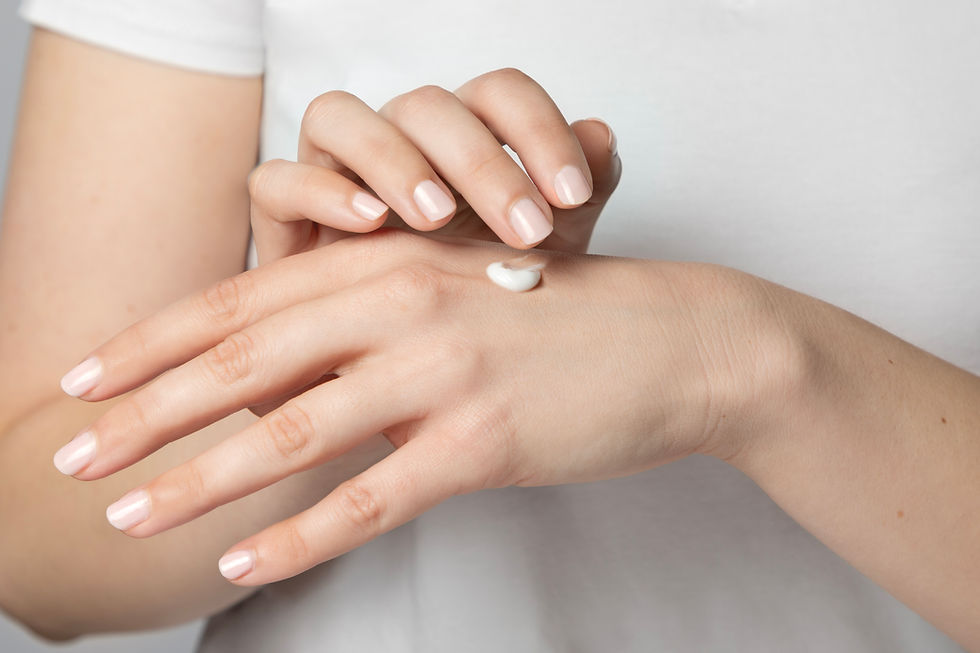
I'm Emily Parsons, a film professional based in the San Francisco Bay Area and Los Angeles with over a decade of experience across acting, directing, writing, production coordinating, and casting. I'm also a female hand model in my 30s, and this is the story of how I ended up specializing in one of the most niche and genuinely fun jobs in the industry.
Quick note for anyone who landed here looking to hire: I'm available for commercial hand modeling in both the San Francisco Bay Area and Los Angeles. Scroll to the bottom, or send me a message directly.
How it started
My path into hand modeling wasn't a single lightbulb moment. It was a slow accumulation of small signs. Early on in my commercial acting work, I was asked to get a manicure before a shoot because there would be close-up hand shots. Then, while working as a PA at a production company, someone asked if I could step in as a hand model on the spot. I held cake pops for a shot, and while I never saw the final image, something clicked.
More and more commercial auditions started asking for hand photos alongside headshots, and I started paying attention. I mentioned to my agents that I was interested in pursuing that type of work, and the first official hand modeling job I booked was for a major national brand. My contract came with an NDA so I can't name them, but you'd know them. I went to set, received an on-set manicure, completed one shot, and was home by lunch. A full day's rate for four hours of work, plus a manicure that held up through a friend's wedding that weekend. I decided to take it seriously.

Building the portfolio
Booking consistently meant showing range. I started collaborating with photographers specifically to build out my portfolio, exploring what makes products pop on camera, which angles sell best, and how lighting interacts with skin tone and nail polishes. It was equal parts creative exercise and professional investment. Over the past two years I've been booked repeatedly by the same production companies, which has been one of the most meaningful indicators that the work is resonating.
Since then I've appeared in national commercials, holiday catalogs, and across the social media feeds of major brands. You likely wouldn't know it was my hands unless I pointed it out, which is sort of the whole job.
What I've learned as a commercial hand model
01
It's about the product, not you. Whether you're holding a lipstick or reaching for a bite of food just outside the frame, your hand exists to serve the product. Face the label toward camera and adjust your grip to what photographs best, not what feels natural.
02
Expect unusual positions. My yoga background has been genuinely useful here. Hand modeling sets are often miniature, so you may need to crouch, lean back, or hold a position with your abs activated for longer than you'd expect, all while keeping your hand looking relaxed and elegant.
03
Offer options. Come in with a plan, but offer variations. Try different hand positions. Shoot days go faster when talent can generate ideas, not just execute them.
04
Slow down on camera. I assumed commercial spots being short meant I should move quickly. The opposite is true. Graceful, controlled movement reads better on camera, and editors can speed it up in post if they need to.
05
Learn the skills the jobs ask for. I've had to audition using chopsticks, kneading dough, and demonstrating architectural handwriting. The trick isn't just mastering the skill. It's making it look natural on camera. Practice first, then film yourself doing it. There's a gap between competence and elegance.
06
Watch other hand models on set. When you're working alongside another hand model, pay attention to how they move, set up, and interact with the crew. Some of my best on-set learning has come from observation.


Comments